
Magento, one of the most powerful eCommerce platforms available, offers several variants to cater to different business needs. These variants vary in terms of customization, hosting, support, and licensing requirements. In this article, we’ll break down the different versions of Magento Open Source and Adobe Commerce to help you choose the right solution for your business.
Magento Open Source
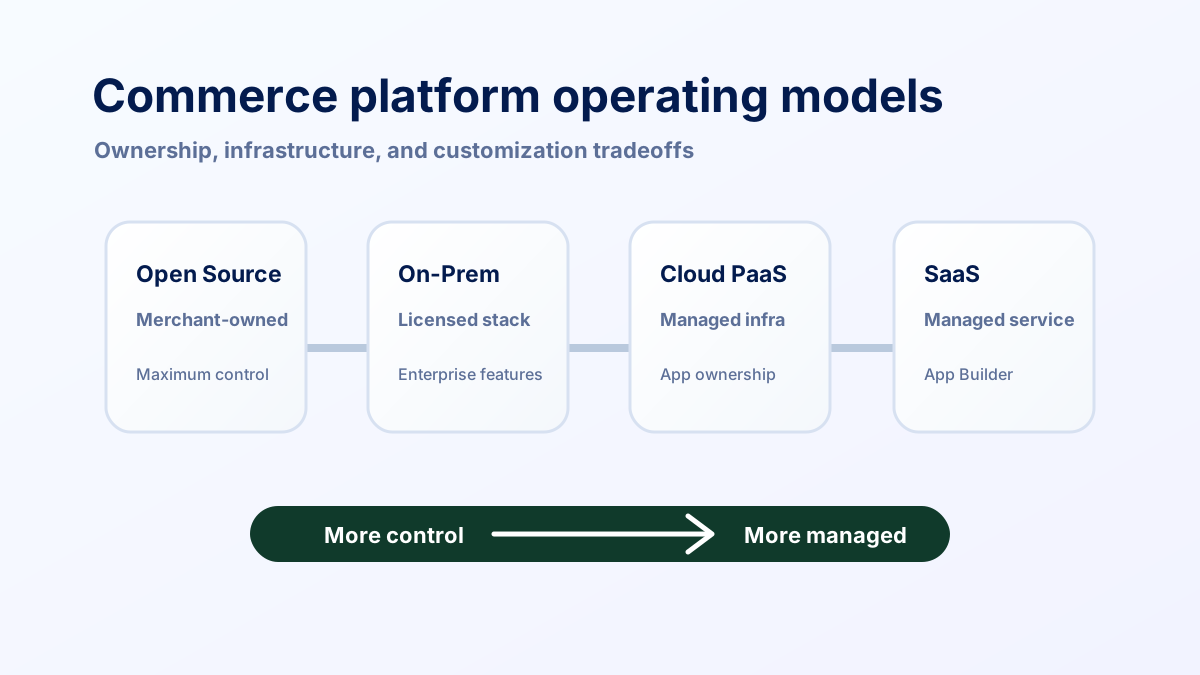
Magento Open Source is the foundational version of the Magento platform, perfect for small to mid-sized businesses. It is an open-source solution, meaning merchants have complete freedom to customize and extend the platform.
Key Features:
- Customization: Merchants can modify core functionalities through custom modules, third-party vendor modules, and custom patches.
- Hosting & Maintenance: The merchant and their development team are responsible for hosting and maintaining the services, including server setup, performance monitoring, and security.
- Cost-Effective: Since it’s free to use, Magento Open Source is an ideal option for businesses on a budget who need flexibility in their eCommerce operations.
This version provides a robust framework for online stores but requires a hands-on approach to ensure it’s properly maintained and scaled.
Adobe Commerce On-Premises
Adobe Commerce On-Premises (formerly known as Magento Commerce) is an enterprise-level solution designed for large businesses with more complex needs. Unlike Magento Open Source, this variant requires a paid Adobe Commerce license.
Key Features:
- Enterprise Features: It comes with advanced features, including personalized content, customer segmentation, and powerful analytics, which are essential for scaling up an eCommerce business.
- Customization & Enhancements: Like Magento Open Source, this version allows customization through custom modules, third-party vendor modules, and patches to enhance core functionalities.
- Hosting & Maintenance: Similar to Magento Open Source, the merchant and their development team are responsible for hosting, maintaining, and ensuring the optimal performance of the services.
This variant is ideal for businesses that require high scalability, advanced security, and robust performance but prefer to manage their infrastructure internally.
Adobe Commerce Cloud
Adobe Commerce Cloud is a Platform as a Service (PaaS) solution designed to provide the full suite of eCommerce features in the cloud. This version is geared towards businesses that want to offload the responsibility of managing infrastructure, while still benefiting from enterprise-grade features.
Key Features:
- Managed Infrastructure: Adobe takes care of the infrastructure, hosting, and service upgrades, relieving merchants from handling technical challenges.
- Enterprise-Grade Features: This version provides a comprehensive range of advanced eCommerce features, including machine learning-powered search, cloud scalability, and customer experience optimization.
- Licensing: Merchants need to obtain an Adobe Commerce Cloud license to use this service.
While Adobe handles the hosting and maintenance of the platform, merchants still retain responsibility for managing the application and working with their development teams to implement custom features and integrations.
Adobe Commerce as a Cloud Service
Adobe Commerce as a Cloud Service is Adobe’s SaaS commerce offering for teams that want Adobe-managed infrastructure, faster provisioning, continuous feature delivery, and API-first extensibility. It combines Commerce Storefront, merchandising services, product visuals, developer tooling, and Commerce Foundation into a cloud-native platform.
Key Features:
- Adobe-Managed SaaS: Adobe manages the infrastructure and platform updates, reducing manual upgrade and patching work for merchants.
- Composable Storefront and Services: Commerce Storefront, merchandising services, product visuals, and Commerce Foundation are designed to work together through modern APIs.
- Extension Model: Custom development and third-party integrations use Adobe’s extensibility tools, including App Builder, API Mesh, events, webhooks, and Admin UI SDK.
This version is best suited for businesses that want the Adobe Commerce foundation with a lower infrastructure burden and a more SaaS-oriented operating model.
Which Magento Version is Right for Your Business?
Choosing between these four variants ultimately depends on your business’s specific needs, resources, and growth ambitions:
- Magento Open Source is best suited for small to medium-sized businesses looking for flexibility and a low-cost entry point.
- Adobe Commerce On-Premises is ideal for businesses that need enterprise-grade features but want to maintain control over their infrastructure.
- Adobe Commerce Cloud provides a managed PaaS solution with all the powerful features of Adobe Commerce but with Adobe handling the infrastructure.
- Adobe Commerce as a Cloud Service is best for businesses looking for an Adobe-managed SaaS model with extensibility through Adobe’s developer platform.
Ultimately, each variant offers different levels of support, customization, and infrastructure management. The right choice will depend on how much control you want over your platform and whether you prefer Adobe to handle the technical aspects of hosting and maintenance.